
Search Properties
Market
Property Type
Deal Type
Corridor
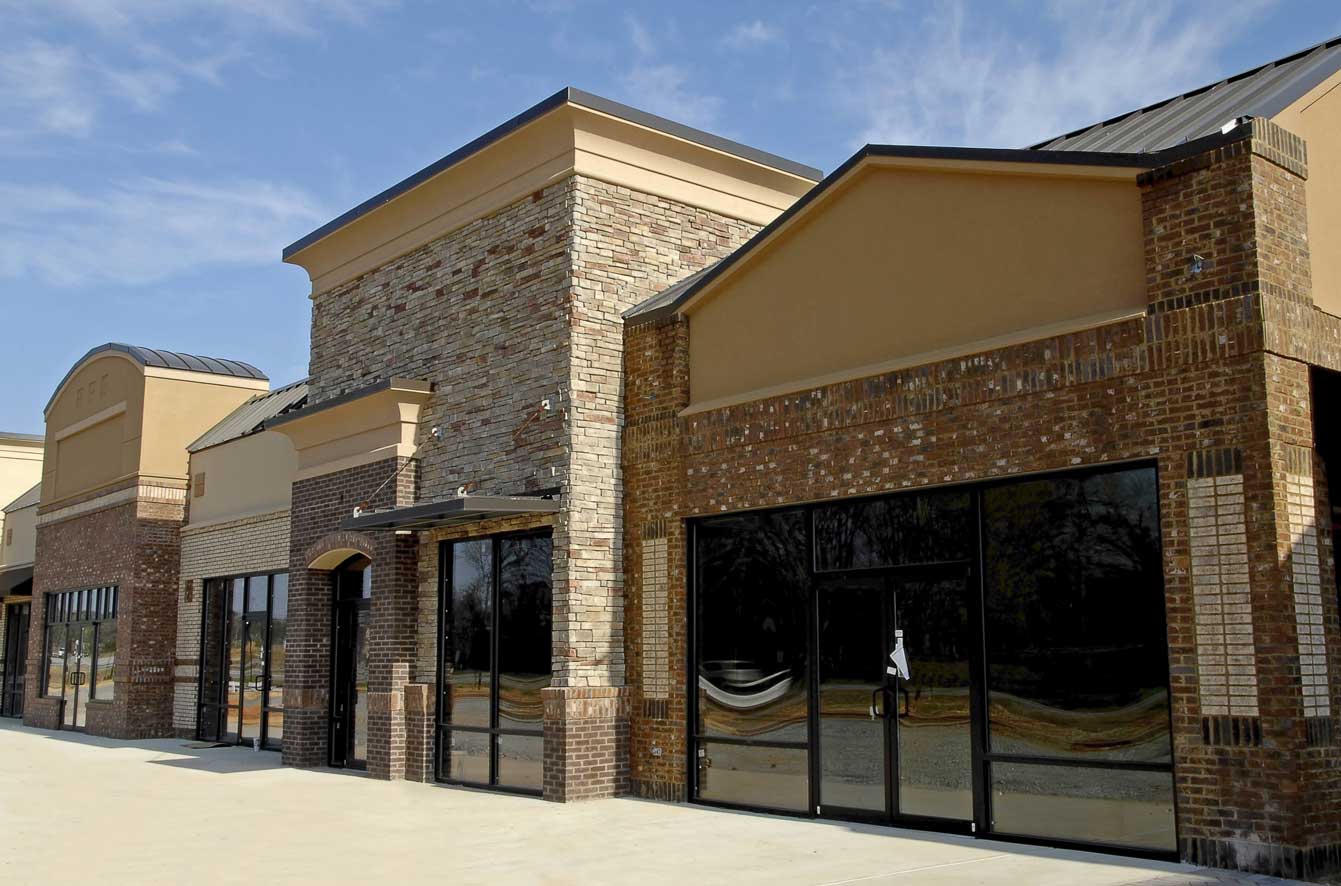
Austin, Texas continues to be one of the fastest-growing commercial real estate markets in the country.
Driven by strong population growth, expanding infrastructure, and increasing business demand, the city has become a prime destination for investors, developers, and business owners seeking long-term opportunity.
As demand continues to rise, commercial property in Austin spans a wide range of opportunities, including retail, office, industrial, and mixed-use developments. High-traffic corridors, growing suburban trade areas, and ongoing infrastructure improvements are creating favorable conditions for both stabilized investments and value-add opportunities.
Investors evaluating Austin commercial real estate often focus on key performance metrics such as Net Operating Income (NOI), capitalization rates, and long-term appreciation potential. Understanding how a property performs relative to market conditions—including vacancy rates, absorption trends, and comparable sales—is essential when identifying strong investment opportunities.
CURRENT COMMERCIAL OPPORTUNITIES >>
The Commercial Real Estate Process
Navigating commercial real estate requires more than just listings—it requires a structured, data-driven approach. From initial analysis to final negotiations, every step is designed to position clients for the strongest possible outcome.
Every opportunity begins with understanding the market. This includes evaluating location, demand, competing properties, and overall positioning within the Austin commercial landscape.
Financial Evaluation
Key metrics such as Net Operating Income (NOI), comparable sales, and market lease rates are analyzed to determine value, pricing strategy, and investment potential.
Target Market Identification
Identifying the right buyer, tenant, or investor is critical. Each property is positioned based on its highest and best use and matched with the most likely target audience.
Strategic Marketing & Exposure
Properties are marketed through a combination of digital exposure, direct outreach, and targeted positioning to reach qualified prospects.
Negotiation & Execution
From initial interest to final agreement, negotiations are structured to align with client objectives, ensuring optimal terms and successful transaction completion.
About Priscilla King

Client Experience Commercial + Home Builder
“Priscilla has the rare combination of being someone who is both creative and organized. When it comes to the projects she manages, you can expect great communication and quick results- you will not have to be the one sending her emails asking about status updates! Priscilla takes responsibility and ownership of her craft very seriously and your expectations will be exceeded when you decide to work with her!”
– Julie Elias, Vice President | Wyldewood Homes
OUR COMMITMENT
We approach commercial real estate with a focus on clarity, strategy, and long-term value. Every property, whether it’s an investment opportunity or an owner-user space, requires a thoughtful understanding of the market, positioning, and financial performance.
With a strong focus on the North Austin corridor, we prioritize high-growth areas, high-traffic locations, and properties positioned for long-term success within one of the most active commercial markets in Texas
As Cedar Park grows, Priscilla is the leading Real Estate Agent studying how the commercial market is performing.
Learn The Market
Austin Investment Market Insights
Why Austin Continues to Attract Commercial Capital
Austin has evolved into one of the most compelling commercial real estate markets in the United States, driven by sustained population growth, corporate migration, and a diversified economic base.
Over the past decade, the region has attracted major employers including Apple, Tesla, Google, Meta, and Oracle—bringing high-income jobs and long-term economic stability. Combined with Texas’ business-friendly environment and absence of state income tax, this has created consistent demand across retail, office, industrial, and multifamily sectors.
For investors, Austin presents a unique balance:
- Strong population-driven demand fundamentals
- Continued rent growth across key submarkets
- Relative pricing advantages compared to coastal gateway cities
This combination supports durable, risk-adjusted returns while reducing reliance on any single industry.
Multifamily: The Backbone of Investment Activity
Multifamily continues to lead transaction volume in the Austin market, supported by strong in-migration trends and a growing renter base.
Elevated mortgage rates have extended rental demand cycles, keeping occupancy levels stable and reinforcing long-term fundamentals. At the same time, Austin’s lifestyle appeal—combined with employment growth—continues to attract both residents and institutional capital.
Key suburban corridors are outperforming:
- Cedar Park
- Round Rock
- Pflugerville
- Kyle / Buda
These areas are seeing:
- Strong absorption
- Favorable rent growth
- Increased development activity
For investors, this creates opportunities across both value-add repositioning and ground-up development strategies.
Emerging Growth Corridors & Strategic Positioning
Austin’s expansion is not uniform—it is highly corridor-driven, with infrastructure and major employers shaping future value.
East Austin remains one of the most dynamic redevelopment zones, benefiting from urban infill, demographic shifts, and proximity to downtown. Meanwhile, large-scale infrastructure projects—particularly along I-35—are actively reshaping accessibility and long-term land values.
Southeast Austin is rapidly emerging as a high-growth commercial corridor, anchored by:
- Tesla’s Gigafactory
- Samsung’s semiconductor expansion
These developments are driving:
- Industrial and service demand
- Retail expansion
- Long-term land appreciation
For investors and owner-users alike, the opportunity lies in identifying these shifts early—before pricing fully reflects future growth.
A Data-Driven Approach to Opportunity
Commercial real estate is not guesswork—it is a function of market knowledge, positioning, and execution.
Understanding where capital is flowing, how demand is shifting, and which submarkets are emerging is critical to making informed investment decisions.
That’s why every opportunity should be evaluated through:
- Market data and absorption trends
- Comparable transactions
- Tenant demand patterns
- Long-term infrastructure impact
This analytical approach ensures decisions are grounded in both current performance and future potential—not speculation.
*Source: CCIM M07_Investment_Anylysis_tools_2025_07_14
Positioning for What’s Next
Austin is no longer an “emerging” market—it is an established growth market with evolving micro-opportunities.
The advantage today is not simply being in Austin.
It’s understanding where within Austin to be—and when to act.
A Corridor with Layered Demand
RM 620 Corridor: A Strategic Growth Corridor
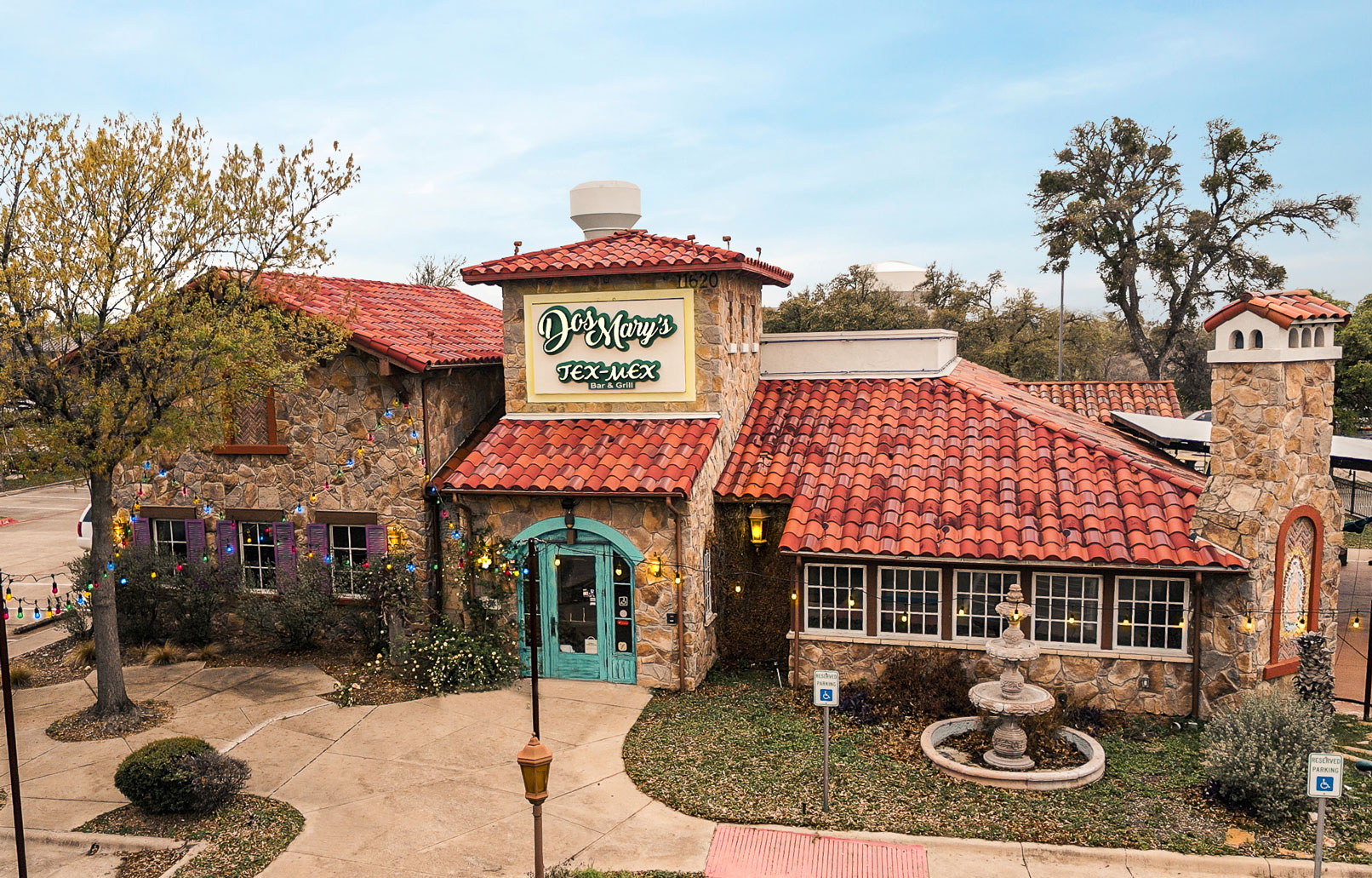
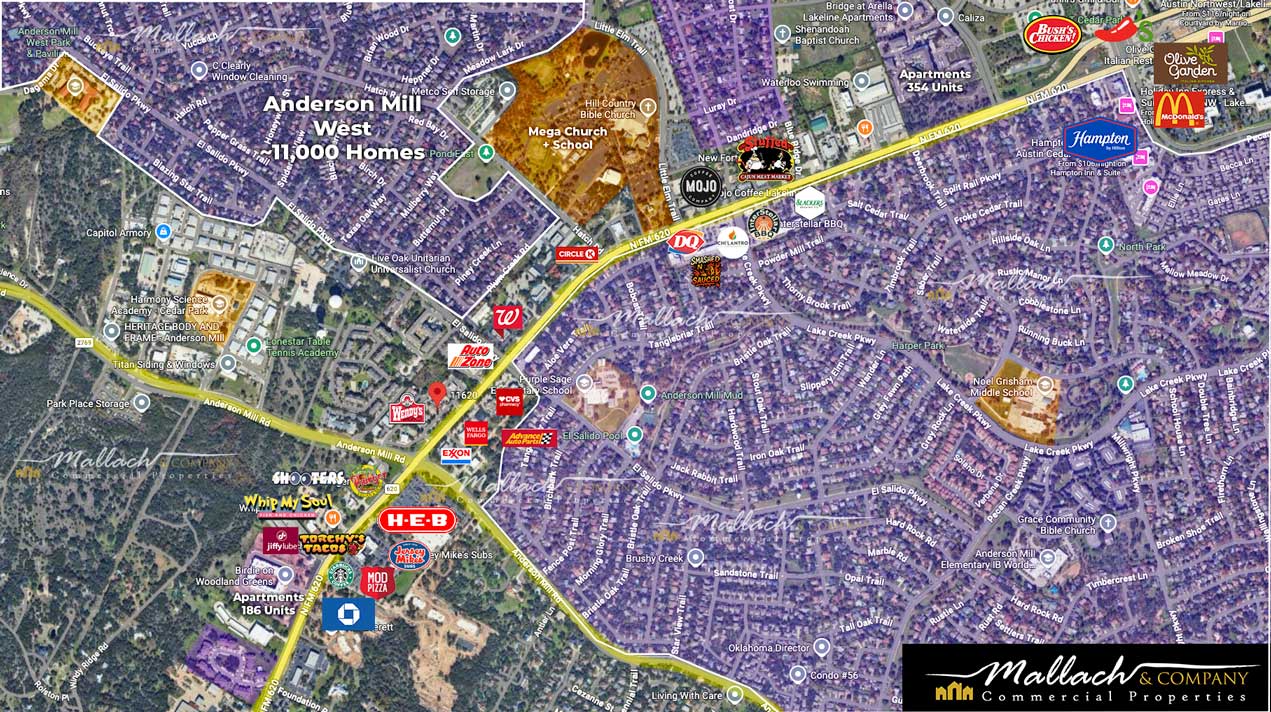
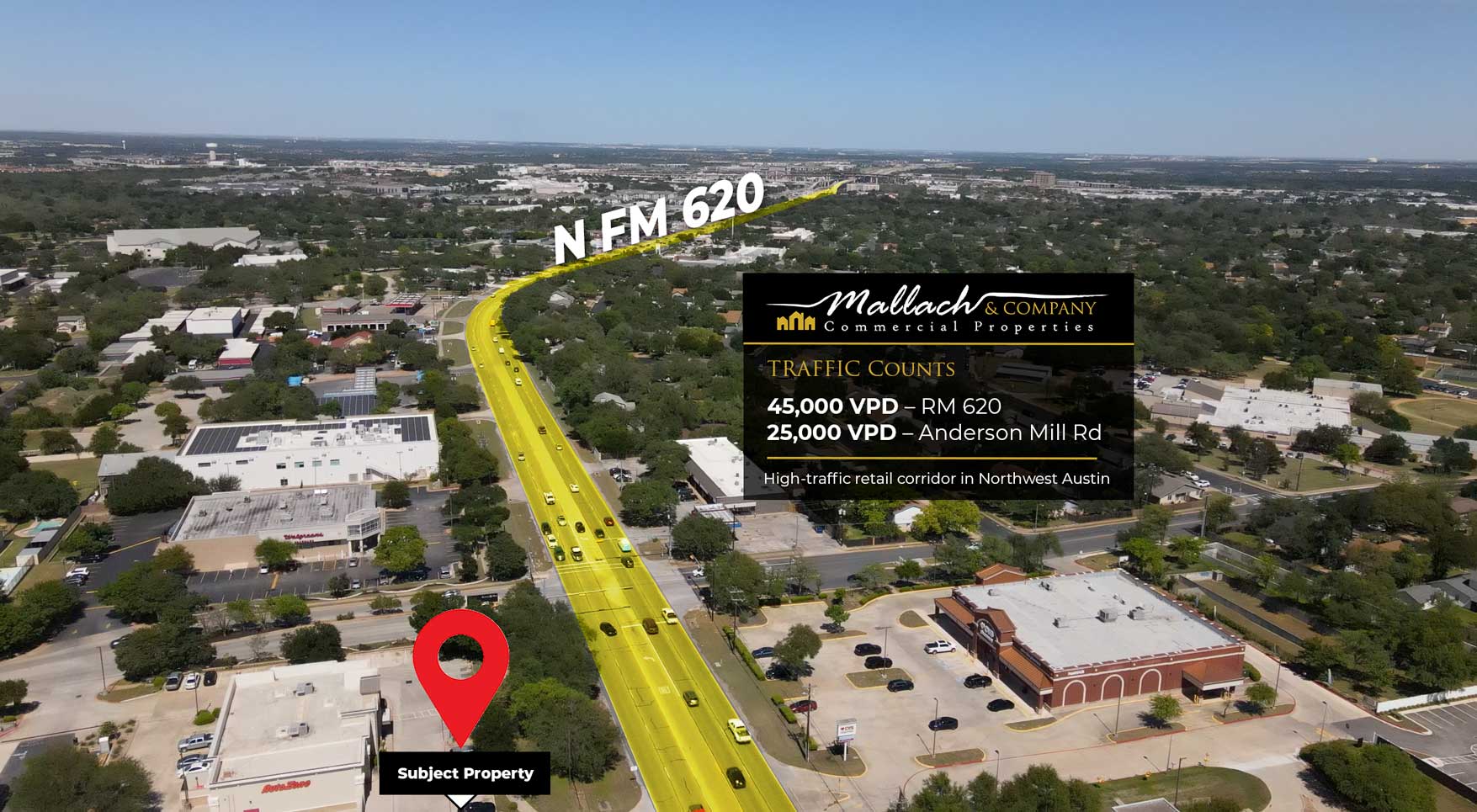
The RM 620 corridor is one of the most active and evolving commercial corridors in the North Austin market, connecting high-income residential density with sustained retail, restaurant, and service demand.
Stretching through key areas including Anderson Mill, Lake Travis, and Cedar Park, this corridor benefits from consistent traffic volumes, strong demographics, and limited available frontage—making well-positioned sites increasingly valuable over time.
Why RM 620 Matters to Investors & Owner-Users
This is not just a high-traffic road—it’s a corridor with layered demand drivers:
- Established residential base with continued population growth
- Daily commuter traffic supporting retail and service users
- Proximity to major employment hubs in Northwest Austin
- Limited new supply relative to demand in key pockets
For owner-users, this creates an opportunity to secure locations that support long-term business visibility and accessibility.
For investors, it presents a clear path to lease-up, stabilization, and long-term appreciation.
Infrastructure, Access & Long-Term Upside
The future of RM 620 is closely tied to ongoing and planned infrastructure improvements aimed at increasing mobility and reducing congestion.
As accessibility improves, surrounding land and retail nodes are expected to benefit from:
- Increased traffic flow efficiency
- Stronger tenant demand
- Higher long-term property values
Understanding how these infrastructure timelines impact positioning is critical when evaluating acquisition or disposition strategy.
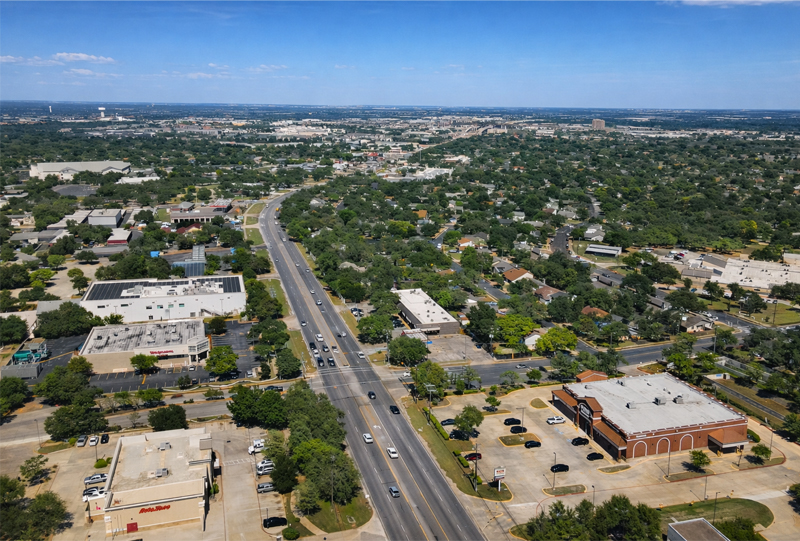
A Ground-Level Understanding of the Corridor
The future of RM 620 is closely tied to ongoing and planned infrastructure improvements aimed at increasing mobility and reducing congestion.
As accessibility improves, surrounding land and retail nodes are expected to benefit from:
- Increased traffic flow efficiency
- Stronger tenant demand
- Higher long-term property values
Understanding how these infrastructure timelines impact positioning is critical when evaluating acquisition or disposition strategy.
Where Strategy Meets Execution
Opportunities along RM 620 are highly competitive—and timing matters.
The difference between an average outcome and a strong one often comes down to:
- Entry timing
- Lease structure
- Tenant alignment
- Negotiation strategy
The focus is not just on finding opportunities—but on executing them correctly.
Get Started
Looking to buy, lease, or reposition along RM 620?
Let’s evaluate where the corridor is today—and where it’s headed.
Brokerage Information:
This property is exclusively represented by Mallach & Company Commercial Properties, providing expert guidance, market insight, and transaction execution throughout the acquisition process.

Tina Mallach
Broker | Mallach & Company Real Estate
Licensed Real Estate Broker – State of Texas #90010901
Address: 304 W Willis St, Leander, TX 78641
Phone: (512) 587-9127
Email: MallachandCompany@gmail.com
Website: www.mallachandcompany.com